
Hind Today News
Breaking | National | World
📜 How the Indian Constitution Works
A simple and clear explanation of the foundation of Indian democracy.
Introduction: The Foundation of Indian Democracy 🇮🇳
The Indian Constitution is not merely a legal document; it is the backbone of the Republic of India. It defines how India functions as a nation and ensures that power is not misused by those in authority. Every law that is passed, every government decision that is made, and every right that a citizen enjoys originates from this supreme document.
India is home to extraordinary diversity — different religions, languages, castes, cultures, and traditions. Without a strong constitutional framework, managing such diversity peacefully would be nearly impossible. The Constitution ensures unity while respecting diversity.
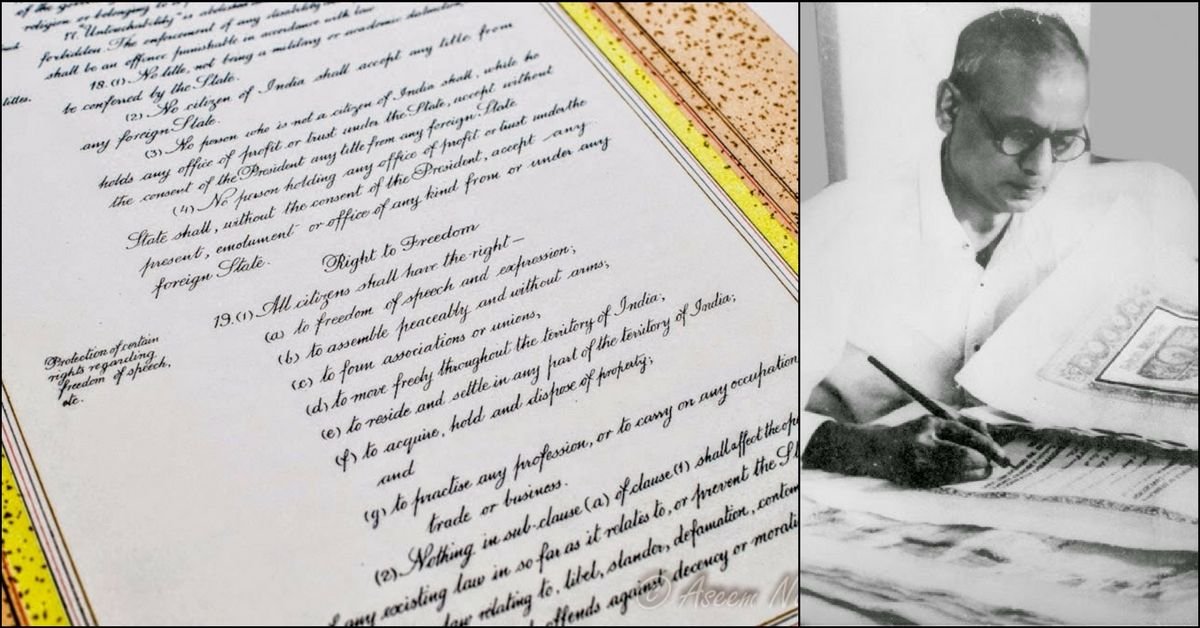
It affects your daily life in ways you may not even realize:
- The right to express your opinion
- The right to education
- The right to equality before law
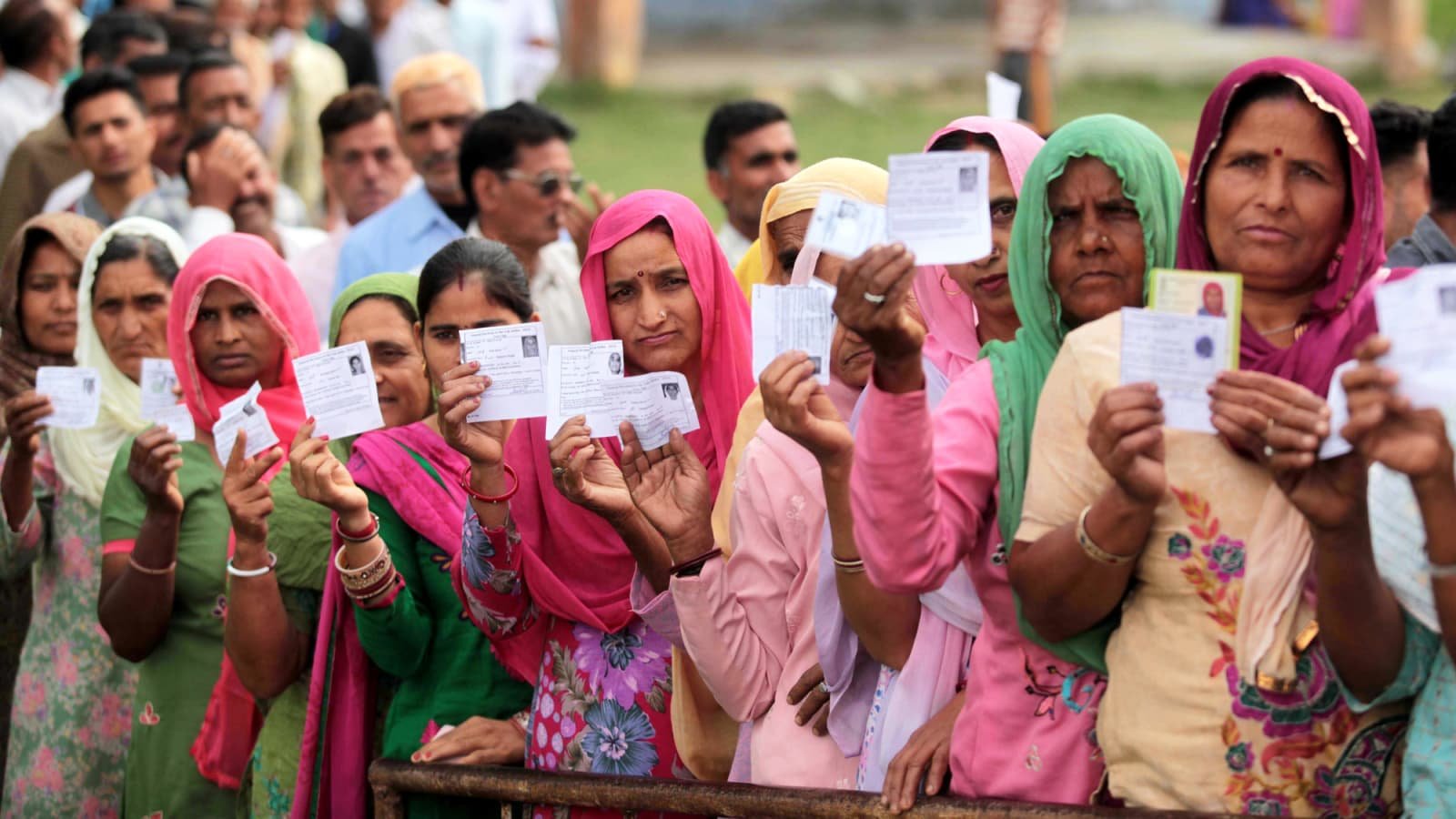
- The right to vote
- Protection from discrimination
The Constitution is supreme. No Parliament, no Prime Minister, no President, and no Court can act against it.

📘 The Making of the Constitution: A Historic Effort
The Constitution did not appear overnight. After India gained independence on 15 August 1947, the country faced massive challenges — partition violence, refugee crises, economic instability, and administrative confusion. It became clear that India needed a comprehensive framework to govern itself.
The Constituent Assembly was formed in 1946. It consisted of representatives from different provinces, communities, and political backgrounds. The Assembly held 11 sessions over nearly three years.
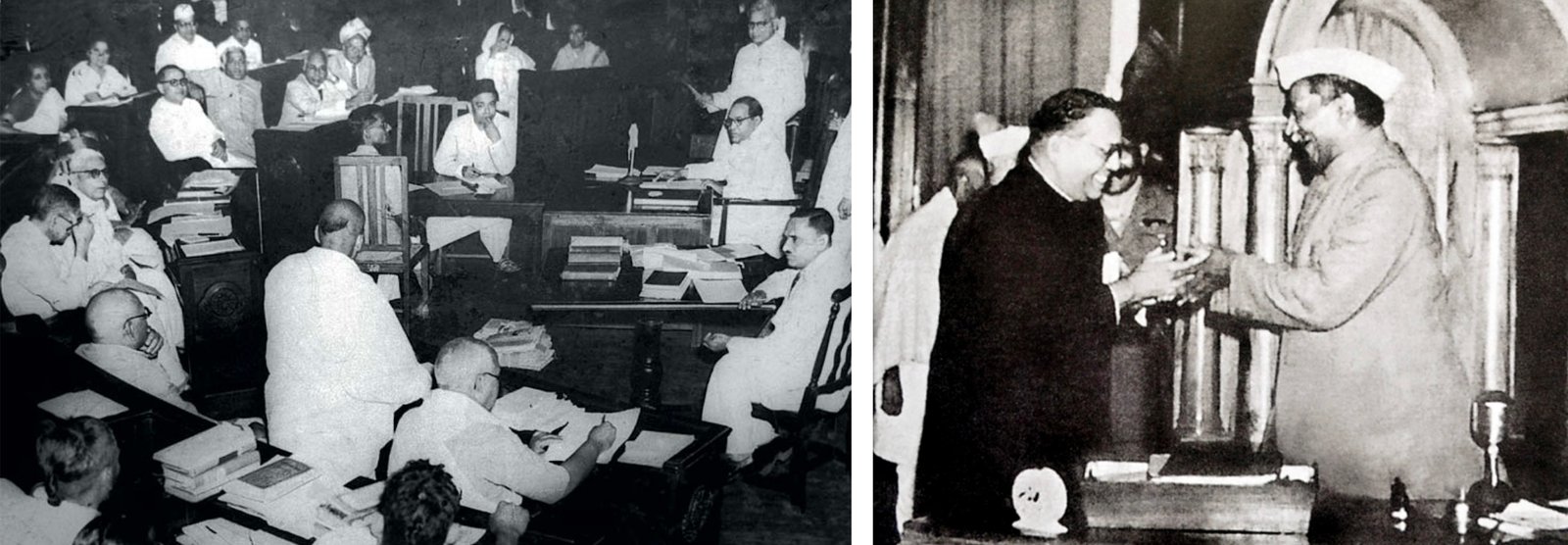
Dr. B. R. Ambedkar, as Chairman of the Drafting Committee, played a crucial role in shaping the Constitution. However, it was truly a collective effort involving leaders like:
- Jawaharlal Nehru
- Sardar Vallabhbhai Patel
- Rajendra Prasad
- Alladi Krishnaswamy Ayyar
- Hansa Mehta
The Constitution was adopted on 26 November 1949 and came into effect on 26 January 1950 — a date chosen to honor the declaration of Purna Swaraj in 1930.
🧠 The Structure of the Constitution
The Indian Constitution is the longest written Constitution in the world. Its length is not accidental — it was designed to address India’s complex social, political, and cultural realities.
It currently contains:
- 25 Parts
- 448 Articles
- 12 Schedules
Each part deals with a specific aspect of governance, such as:
- Citizenship
- Fundamental Rights
- Union and State Governments
- Judiciary
- Emergency provisions
This detailed structure ensures clarity and reduces ambiguity in governance.
🏛️ The Preamble: The Spirit of the Constitution
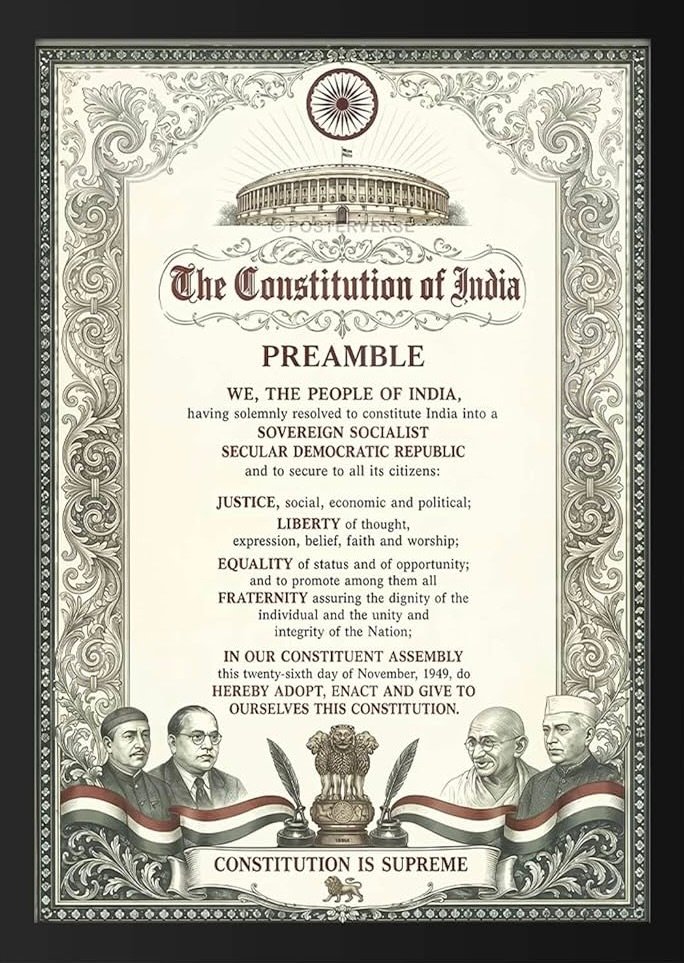
The Preamble is often called the “soul” of the Constitution. It explains the philosophy and goals of the Indian Republic.
It declares India as:
- Sovereign
- Socialist
- Secular
- Democratic
- Republic
Each word carries deep meaning:
Sovereign means India is independent and not controlled by any external power.
Socialist reflects commitment to social and economic equality.
Secular means the state treats all religions equally.
Democratic indicates that power rests with the people.
Republic means the head of state is elected, not hereditary.
The Preamble promises:
- Justice — social, economic, and political
- Liberty — of thought, expression, belief and faith
- Equality — of status and opportunity
- Fraternity — assuring the dignity of the individual and the unity of the nation
🇮🇳 Fundamental Rights: Protection of Individual Freedom
Fundamental Rights, given under Part III of the Constitution, are essential for protecting citizens from arbitrary state action. They form the cornerstone of Indian democracy.
⚖️ Fundamental Rights
- The Right to Equality is guaranteed under Articles 14 to 18 of the Indian Constitution. It ensures that all citizens are equal before the law and prohibits discrimination on the basis of religion, race, caste, sex, or place of birth. It also provides equal opportunity in public employment and abolishes untouchability and titles. This right promotes fairness and justice in society.
- The Right to Freedom is guaranteed under Articles 19 to 22 of the Indian Constitution. It gives citizens essential freedoms such as freedom of speech and expression, movement, residence, profession, and assembly. It also protects individuals from arbitrary arrest and detention. This right ensures personal liberty and democratic functioning in the country.
- The Right Against Exploitation is guaranteed under Articles 23 and 24 of the Indian Constitution. It prohibits human trafficking, forced labour, and begar (work without payment). It also bans the employment of children below 14 years in hazardous industries and factories. This right protects individuals, especially the poor and children, from exploitation and injustice.
- Freedom of Religion is guaranteed under Articles 25 to 28 of the Indian Constitution. It gives every citizen the right to freely profess, practice, and propagate any religion of their choice. The State does not favor any religion and treats all religions equally. This right ensures India remains a secular country where religious harmony is maintained.
- Cultural and Educational Rights are guaranteed under Articles 29 and 30 of the Indian Constitution. These rights protect the interests of minorities by allowing them to preserve their language, script, and culture. They also give minorities the right to establish and manage their own educational institutions. This ensures diversity and promotes equality in a multicultural country like India.
- Right to Constitutional Remedies is guaranteed under Article 32 of the Indian Constitution. It allows citizens to approach the Supreme Court or High Courts if their Fundamental Rights are violated. The courts can issue writs such as Habeas Corpus, Mandamus, Prohibition, Certiorari, and Quo Warranto to protect these rights. This right ensures that Fundamental Rights are enforceable and meaningful.
- Dr. B. R. Ambedkar called this the “heart and soul” of the Constitution because it empowers citizens to defend their rights.
🧭 Fundamental Duties: Responsibilities of Citizens
While rights empower citizens, duties remind them of their responsibilities. Fundamental Duties were added by the 42nd Amendment in 1976.
Every citizen must:
- Respecting the Constitution means following the principles, values, and ideals on which India is founded. It requires every citizen to obey the laws, uphold democratic institutions, and honor national symbols like the National Flag and National Anthem. This duty promotes unity, discipline, and respect for the rule of law. By respecting the Constitution, citizens help strengthen the nation and its democracy.
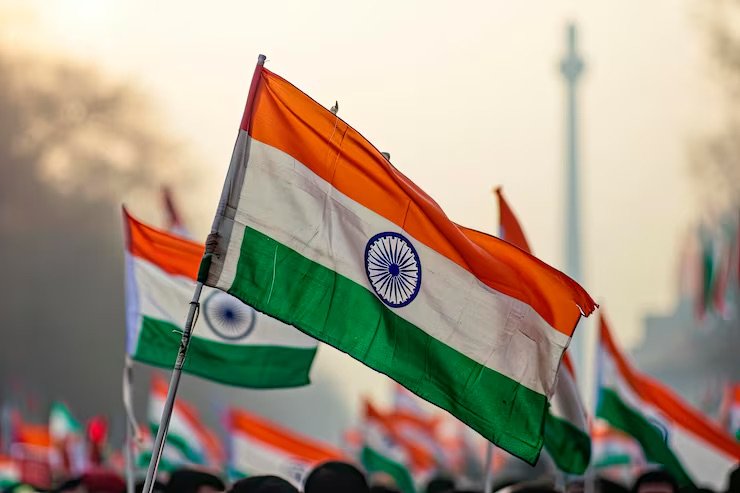
- Respecting the National Flag and National Anthem is a Fundamental Duty under Article 51A of the Indian Constitution. It means showing honor and dignity towards these national symbols as they represent the unity, sovereignty, and integrity of the country. Citizens must stand respectfully during the National Anthem and treat the National Flag with proper care. This duty promotes patriotism and national pride among the people.
- Protecting the environment is a Fundamental Duty under Article 51A of the Indian Constitution. It requires every citizen to safeguard forests, rivers, lakes, wildlife, and natural resources. Citizens must avoid pollution and promote sustainable use of resources. By protecting the environment, we ensure a healthy and safe future for coming generations.
- Promoting harmony is a Fundamental Duty under Article 51A of the Indian Constitution. It requires citizens to maintain unity and brotherhood among people of different religions, languages, regions, and cultures. Every citizen must avoid discrimination and work towards social unity. This duty strengthens national integration and peaceful coexistence in a diverse country like India.
- Safeguarding public property is a Fundamental Duty under Article 51A of the Indian Constitution. It means protecting government property such as roads, buses, schools, hospitals, and public buildings from damage or misuse. Citizens must not destroy or vandalize public assets during protests or for personal reasons. By safeguarding public property, we help maintain national resources and promote responsible citizenship.
- Defending the country is a Fundamental Duty under Article 51A of the Indian Constitution. It requires every citizen to protect the sovereignty, unity, and integrity of India. Citizens must be ready to serve the nation during times of war or national emergency. This duty promotes patriotism, responsibility, and commitment towards the nation’s safety.
These duties encourage civic responsibility and national unity.
🏗️ Directive Principles of State Policy
The Directive Principles are guidelines for the government to create a just society. Though not enforceable in court, they influence policymaking.
They aim to ensure:
- Equal pay for equal work
- Free legal aid
- Public health improvement
- Protection of children and women
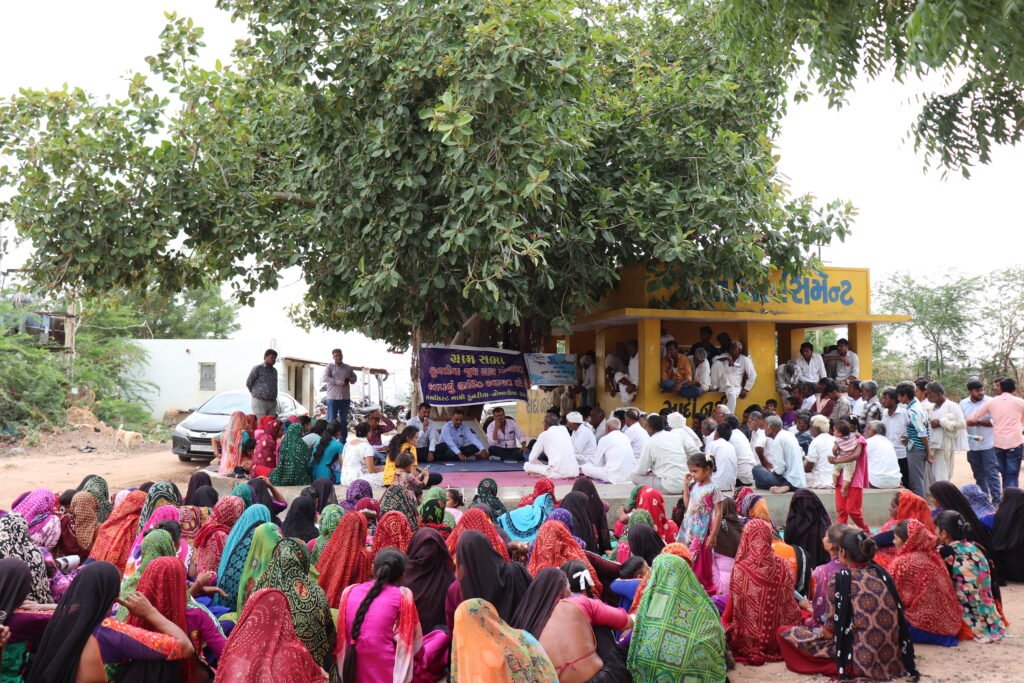
- Promotion of village panchayats
They reflect the goal of transforming India into a welfare state.
🗳️ Structure of Government: Separation of Powers
The Constitution divides power into three organs:
- Legislature – Makes laws(Parliament)
- Executive – Implements laws(President, Prime Minister, Council of Ministers)
- Judiciary – Interprets laws (Supreme Court and High Courts)
This separation prevents concentration of power and ensures accountability.
✍️ Federal Structure of India
India follows a federal system with a strong central authority. Powers are divided into:
- Union List
- State List
- Concurrent List
This ensures balanced governance across a vast country.
🌍 Emergency Provisions
The Constitution provides emergency powers for extraordinary situations:
A National Emergency can be declared under Article 352 during war, external aggression, or armed rebellion. During this period, the central government gains more power and certain Fundamental Rights may be suspended.
State Emergency is imposed under Article 356 when the constitutional machinery of a state fails. The President takes control of the state administration.
President's Rule is another name for State Emergency. It means the state government is suspended and the state is governed directly by the President through the Governor.
A Financial Emergency can be declared under Article 360 if the financial stability of India is threatened. The central government can control state finances and reduce salaries of government officials.
During emergencies, certain rights may be restricted, but safeguards exist to prevent misuse.
⚖️ Amendment Procedure
Article 368 allows amendments to the Constitution to adapt to changing times. However, the Supreme Court established the Basic Structure Doctrine, meaning core features like democracy and secularism cannot be destroyed.
This ensures flexibility with stability.

✅ Conclusion: The Living Document
The Indian Constitution is not static. It evolves with time through amendments and judicial interpretation. It balances power, protects rights, promotes equality, and maintains national unity.
Every Indian citizen must understand:
- Their rights
- Their duties
- The importance of democracy
- The value of equality
- The power of voting
The strength of the Constitution ultimately depends on the awareness and responsibility of its citizens.
India’s democracy survives not merely because of elections, but because of the constitutional values that guide it.
📌 FAQs
Q1. Is the Constitution above the government?
Yes. The Constitution is supreme.
Q2. Can Fundamental Rights be suspended?
Only under special conditions like a national emergency, and even then with limits.
Q3. Who protects the Constitution?
The Judiciary, especially the Supreme Court.