
Hind Today News
Breaking | National | World
📊 Union Budget Explained
What the Indian Budget Means for Common People 🇮🇳
👉 Introduction: Why the Union Budget Matters to Every Citizen
The Union Budget of India is not just a financial statement presented once a year in Parliament; it is the most powerful economic policy document of the country. It determines how the government plans to earn money, how it intends to spend that money, and what priorities it sets for national development. Although many citizens perceive the Budget as something meant for economists, business leaders, or politicians, the truth is that it affects every Indian household in direct and indirect ways.
Whenever the Finance Minister rises in the Lok Sabha to present the Budget, it is not merely a speech—it is the announcement of financial decisions that will influence taxation, subsidies, infrastructure projects, social welfare schemes, defense spending, education funding, and healthcare allocation for the next financial year. The financial year in India runs from 1 April to 31 March.

For a common person, the Budget affects:
- The amount of income tax they pay
- The prices of daily goods and services
- Fuel costs and transport fares
- Employment opportunities
- Interest rates on loans
- Government benefits and subsidies
Understanding the Union Budget is therefore not optional—it is essential for every informed citizen in a democracy.
👉 Constitutional Basis of the Union Budget
The Union Budget is not a political formality. It is a constitutional requirement under the Indian Constitution. The financial powers of the government are strictly regulated to ensure democratic accountability and transparency.
The Constitution provides the legal framework under:
📜 Article 112 – Annual Financial Statement (Indian Constitution)
Article 112 of the Constitution of India deals with the Annual Financial Statement, which we commonly call the Union Budget.Article 112 of the Constitution of India deals with the Annual Financial Statement, which we commonly call the Union Budget.
- Article 112 of the Indian Constitution provides for the Annual Financial Statement, commonly known as the Union Budget. It is presented by the President before both Houses of Parliament and contains the estimated receipts and expenditure of the Government of India for a financial year. The expenditure is divided into charged and voted expenditure. It ensures parliamentary control over public finance.
📜 Article 113 – Procedure for Annual Financial Statement
- Article 113 of the Constitution of India deals with the procedure in Parliament regarding estimates in the Annual Financial Statement. It provides that expenditure charged on the Consolidated Fund of India is not submitted to vote, while other expenditures are submitted to the Lok Sabha for voting in the form of Demands for Grants. The Lok Sabha has the power to approve, reduce, or reject these demands.
📜 Article 114 – Appropriation Bills
Article 114 of the Constitution of India deals with the Appropriation Bill, which gives legal authority to the government to withdraw money from the Consolidated Fund of India.
🔹 Simple Meaning
- The Budget is presented (Article 112)
- Demands for Grants are voted (Article 113)
🔹 What Does It Contain?
The Appropriation Bill includes:
- 1. Money required for:
- Voted expenditure (approved by Lok Sabha)
- Charged expenditure (already discussed but not voted)
- 2. Total authorized amount to be withdrawn from:
- Consolidated Fund of India
🔹 Important Features
- 1. It is introduced in Lok Sabha.
- 2. It is a Money Bill.
- 3. It cannot be amended to:
- Increase the amount of expenditure
- Alter the purpose of expenditure
- 4. After passing in Parliament, it goes to the President for assent.
Article 114 of the Indian Constitution provides for the Appropriation Bill. After the Demands for Grants are voted, a bill is introduced to authorize the withdrawal of money from the Consolidated Fund of India. It includes both voted and charged expenditures. Once passed, it becomes the Appropriation Act, allowing the government to spend public money legally.
📜 Article 115 – Supplementary, Additional or Excess Grants
Article 115 of the Constitution of India deals with situations where the amount approved in the Annual Financial Statement is not sufficient or extra spending is required.
🔹 Simple Meaning (Understand This Carefully)
During a financial year, three situations may arise:
- 1️⃣ Supplementary Grant
When the approved amount is insufficient for a particular service.
- 2️⃣ Additional Grant
When a new service not included in the original budget needs funds.
- 3️⃣ Excess Grant
When the government has spent more than the amount originally approved.
🔹 Procedure
- The President causes another statement to be laid before Parliament.
- The demands are voted in Lok Sabha.
- An Appropriation Bill is passed to authorize withdrawal from the Consolidated Fund of India.
Article 115 of the Indian Constitution provides for Supplementary, Additional and Excess Grants. If the approved budget amount is insufficient, new services require funds, or excess expenditure occurs, the government must seek approval from the Lok Sabha. After voting, an Appropriation Bill is passed to authorize withdrawal from the Consolidated Fund of India. It ensures parliamentary control over additional spending.
📜 Article 265 – No Tax Shall Be Levied or Collected Except by Authority of Law
Article 265 of the Constitution of India establishes a very important principle of financial and constitutional control over taxation in India.
🔹 Simple Meaning
Article 265 states that the government cannot impose or collect any tax unless it is authorized by a law passed by the legislature.
- The government cannot arbitrarily impose taxes.
- Every tax must be backed by a valid law passed by Parliament or the State Legislature.
- Citizens are protected from illegal taxation.
🔹 Key Idea Behind Article 265
👉 “No taxation without representation.”
This means the people’s elected representatives in the legislature must approve every tax before it is imposed.
🔹 Important Points
- Tax must have legal authority.
- Executive orders alone cannot impose taxes.
- Tax must be created through legislation.
- If a tax is collected without legal authority, it can be challenged in court.
Article 265 of the Indian Constitution states that no tax shall be levied or collected except by authority of law. This means that taxes can only be imposed through legislation passed by Parliament or the State Legislature. It prevents arbitrary taxation by the government and ensures that taxation follows constitutional and legal procedures.
👉 The Executive cannot spend public money without approval of the Legislature.
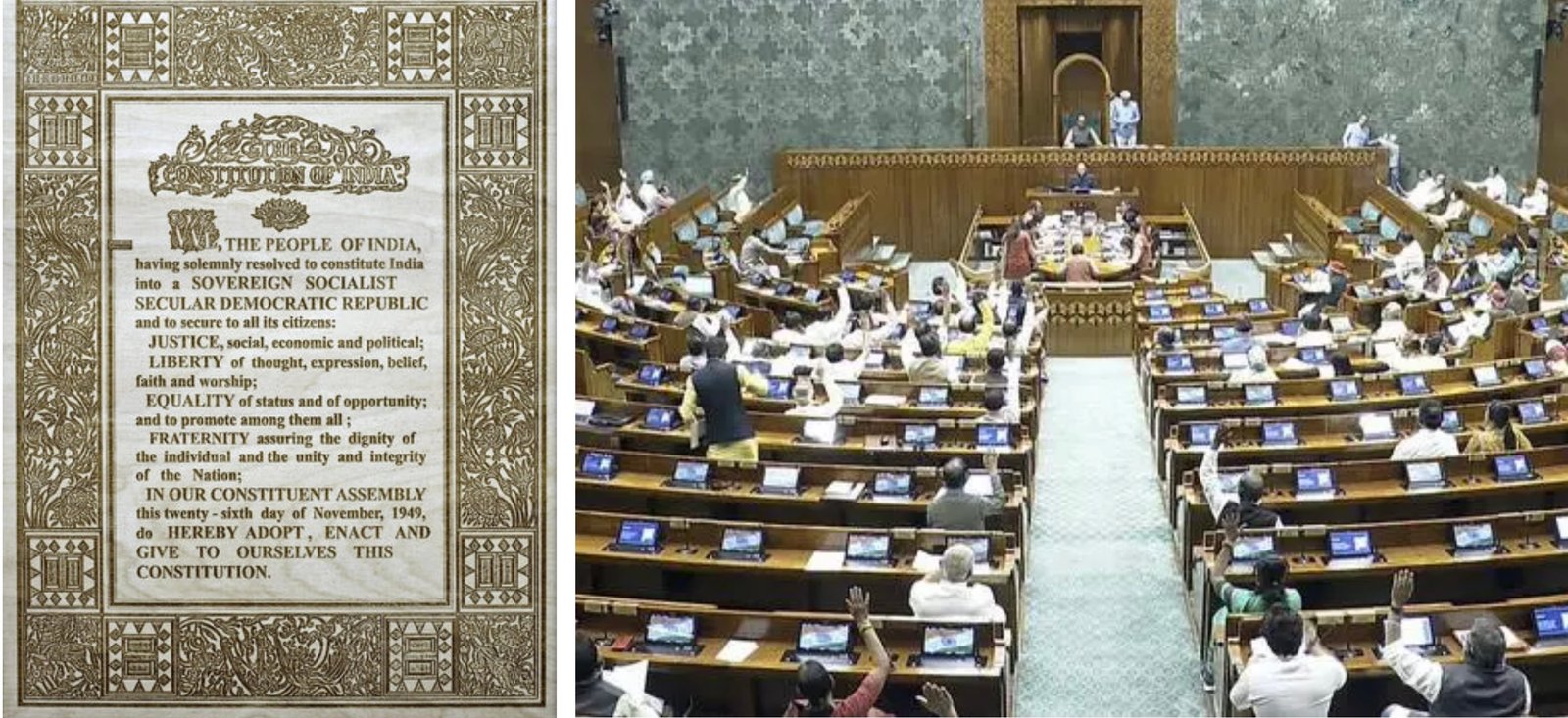
Parliament has control over the nation’s finances. Without parliamentary approval, the government cannot impose taxes or withdraw money from the Consolidated Fund of India.
This constitutional safeguard prevents arbitrary taxation and reckless government spending.
👉 The Structure of the Union Budget
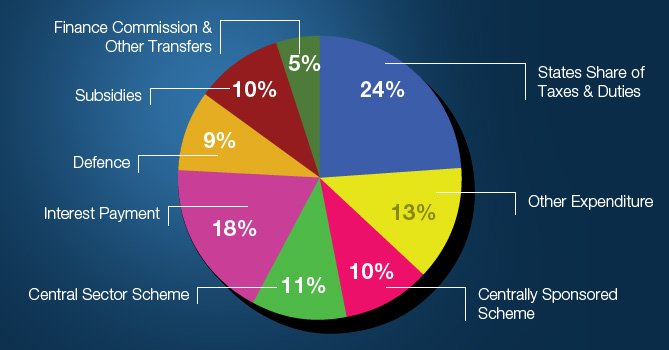
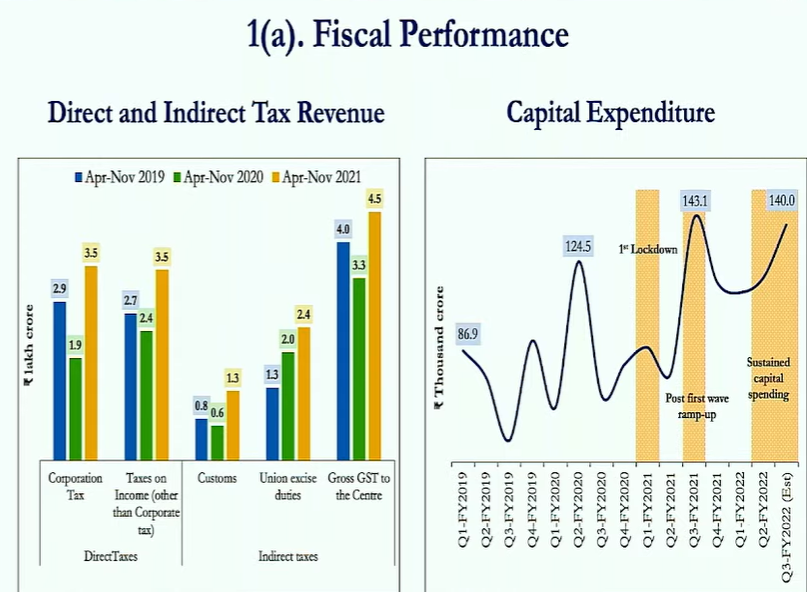
The Union Budget is broadly divided into two major parts: the Revenue Budget and the Capital Budget. These two components reflect how the government manages recurring expenses and long-term investments.
The Revenue Budget deals with income and expenditure that do not result in asset creation. It includes government earnings from taxes such as income tax, corporate tax, and GST. It also includes expenditure like salaries of government employees, interest payments on debt, subsidies, and administrative expenses.
The Capital Budget, on the other hand, deals with expenditures that create assets or reduce liabilities. It includes investments in infrastructure, loans to states, and repayment of borrowings.
To understand clearly:
- Revenue items are recurring and operational.
- Capital items are developmental and long-term.
The Budget also classifies receipts into:
- Tax revenue
- Non-tax revenue
- Capital receipts
👉 How the Budget is Prepared
The preparation of the Union Budget is a complex administrative exercise that begins several months before it is presented. The Ministry of Finance coordinates the entire process, but inputs are gathered from every ministry and department.
Each ministry estimates its expenditure requirements for the coming year. Simultaneously, the Revenue Department projects expected tax collections based on economic growth trends. Economic advisors assess inflation, GDP growth, fiscal deficit, and global economic conditions.
Consultations are conducted with:
- Industry bodies
- Agricultural representatives
- Economists
- Trade unions
- State governments
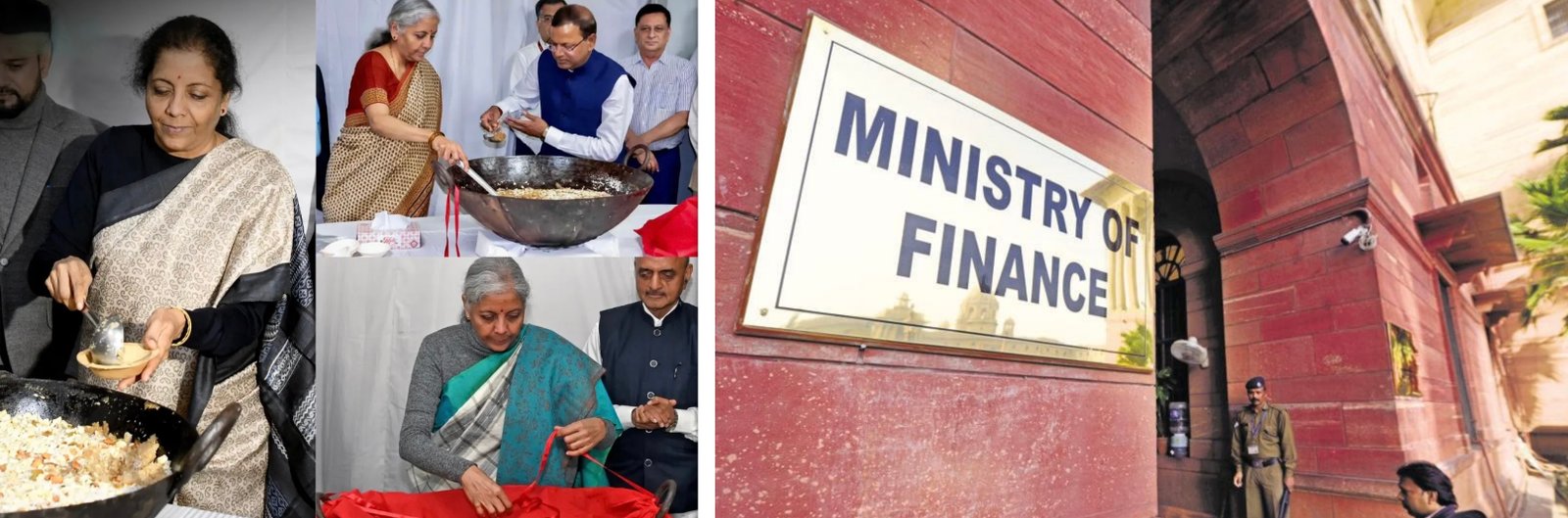
The final document is prepared under strict secrecy to avoid market speculation. The traditional “Halwa Ceremony” marks the beginning of printing Budget documents.
👉 Important Financial Concepts Every Citizen Must Know
To understand the Budget meaningfully, a citizen must understand certain financial terms.
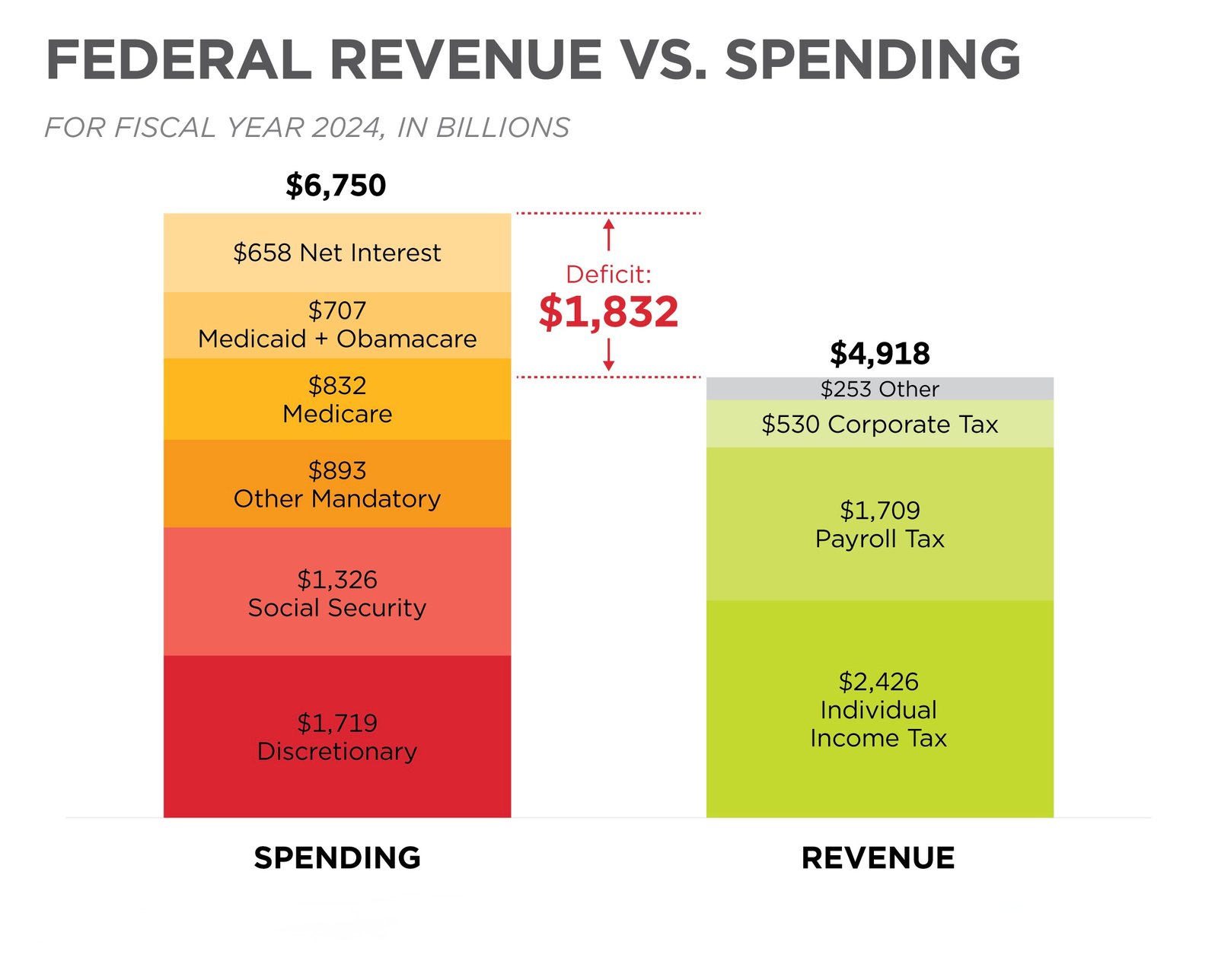
Fiscal Deficit refers to the gap between total government expenditure and total revenue (excluding borrowings). When the government spends more than it earns, it borrows money. A very high fiscal deficit can increase national debt and inflation.
Revenue Deficit occurs when revenue expenditure exceeds revenue receipts. This indicates that the government is borrowing money even for routine expenses.
These indicators reflect the financial health of the country. Responsible budgeting aims to keep deficits under control while promoting growth.
👉 Impact of the Budget on Common People
Now we come to the most important part — how the Budget directly and indirectly affects ordinary citizens.
For salaried individuals, changes in income tax slabs determine their take-home salary. A higher exemption limit means more savings, while increased tax rates reduce disposable income.
For middle-class families, Budget decisions influence:
- Home loan interest benefits
- Education loan deductions
- Insurance tax exemptions
- Savings schemes like PPF and NSC
For farmers, allocations toward fertilizer subsidies, irrigation projects, rural development schemes, and minimum support price mechanisms impact agricultural income stability.
For businesses, corporate tax rates, customs duties, startup incentives, and MSME schemes affect profitability and employment generation.
For students and youth, funding for skill development programs, digital education initiatives, and university grants determines access to opportunities.

Indirectly, changes in GST or excise duty influence the price of:
- Petrol and diesel
- Consumer goods
- Electronics
- Household products
👉 Budget as a Tool of Economic Policy
The Union Budget is not only about accounting—it is a powerful economic tool. Through the Budget, the government can stimulate growth during economic slowdown or control inflation during overheating of the economy.
Capital expenditure on infrastructure such as roads, railways, airports, and digital connectivity generates employment and boosts long-term productivity.
Social sector spending improves human development indicators like literacy, healthcare access, and poverty reduction.

By adjusting tax rates and public spending, the government attempts to balance growth, stability, and equity.
👉 Transparency and Accountability
India follows the Fiscal Responsibility and Budget Management (FRBM) Act to maintain fiscal discipline. The Act sets targets for reducing fiscal deficit and public debt.
The Budget is discussed extensively in Parliament. Members debate, criticize, and suggest amendments. Media coverage and public scrutiny ensure transparency.
This system ensures that:
- Public money is used responsibly
- Citizens can question government spending
- Economic priorities remain accountable
👉 Why Every Citizen Must Understand the Budget
The Union Budget is not a distant government document. It shapes everyday life. It determines how much money remains in your pocket, what services you receive, and how the nation progresses.
Every citizen must understand:
- How taxes are structured
- Where government money is spent
- How borrowing affects future generations
- Why fiscal discipline matters
An informed citizen strengthens democracy by holding the government accountable for financial decisions.
👉 Conclusion: The Budget as the Financial Face of the Constitution
The Union Budget is where constitutional principles meet economic reality. The Constitution ensures that no tax is imposed without law and no money is spent without parliamentary approval. The Budget operationalizes these principles every year.
It reflects:
- Government priorities
- National development strategy
- Economic direction
- Welfare commitments
Ultimately, the Union Budget connects macroeconomic policy with the daily life of common people. It translates constitutional ideals into financial action.
📌 FAQs
Q1. Is the Union Budget only about taxes?
No. It includes spending, subsidies, development, and borrowing.
Q2. When is the Union Budget presented?
Usually on 1st February.
Q3. Can Parliament reject the budget?
Yes. Parliamentary approval is mandatory.